
There are sentences that create tension in a room, and then there are sentences that quietly shrink it without making a sound. “That’s not my responsibility” belongs to the second category. It does not slam doors. It installs invisible walls.
The moment it is spoken, the temperature drops by half a degree. Not enough for anyone to complain, just enough for courage to reconsider its position.
Someone raises an issue. It may be messy, slightly undefined, inconveniently cross-functional. Perhaps a customer is frustrated, perhaps a deadline is slipping, perhaps something small is quietly eroding trust.
And then comes the sentence, delivered with professional calm:
“That’s not my responsibility.”
What fascinates me is how reasonable it sounds. It carries the logic of structure, the dignity of role clarity, the comfort of defined territory. It implies maturity. It implies boundaries. It implies efficiency.
But what it often reveals is something far more fragile.
Because responsibility in high-performing teams is not a hot potato to be passed with legal precision. It is not a tennis ball that must land cleanly on the correct side of the net before anyone is allowed to touch it. It is much closer to weightlifting, slightly uncomfortable, occasionally heavy, and far more effective when shared.
When someone says, “That’s not my responsibility,” what I often hear underneath is: “If I step into this, I may inherit risk, visibility, or blame.” And in cultures where mistakes are remembered longer than successes, that hesitation makes perfect psychological sense.
But here is where it becomes dangerous.
Customers do not experience your org chart. They do not care whether the problem technically belongs to Marketing, Operations, Finance, or the Department of Elegant Excuses. They experience one company. One brand. One outcome.
Fragmented ownership feels sophisticated internally and chaotic externally.
I once watched five extremely intelligent leaders discuss a failing project with surgical precision, each one carefully outlining why the root cause originated slightly outside their formal remit. The analysis was brilliant. The accountability was missing. It felt like watching five chefs debate whose knife should cut the onion while the stove was already on fire.
The real danger of this sentence is not laziness. It is territorial thinking disguised as professionalism. Job descriptions become medieval kingdoms, complete with borders, flags, and silent treaties. “This land is mine.” “That land is yours.” “We shall not cross without documented permission.”
But growth does not happen in fortified castles. It happens when someone voluntarily crosses the border and says, “It may not be officially mine, but I will help carry it.”
That single shift changes everything.
Leadership is not measured by how precisely you defend your scope. It is measured by how confidently you expand the circle of ownership when the outcome matters.
So the next time you hear, “That’s not my responsibility,” resist the urge to correct it with aggression. Instead, gently redirect the lens and ask, “Whose result is being affected here?” Because if the answer includes the customer, the team, the reputation, or the future, then the conversation is already bigger than one job title.
Rooms shrink when ownership shrinks.
Rooms expand when someone is brave enough to step slightly beyond their defined square meter.
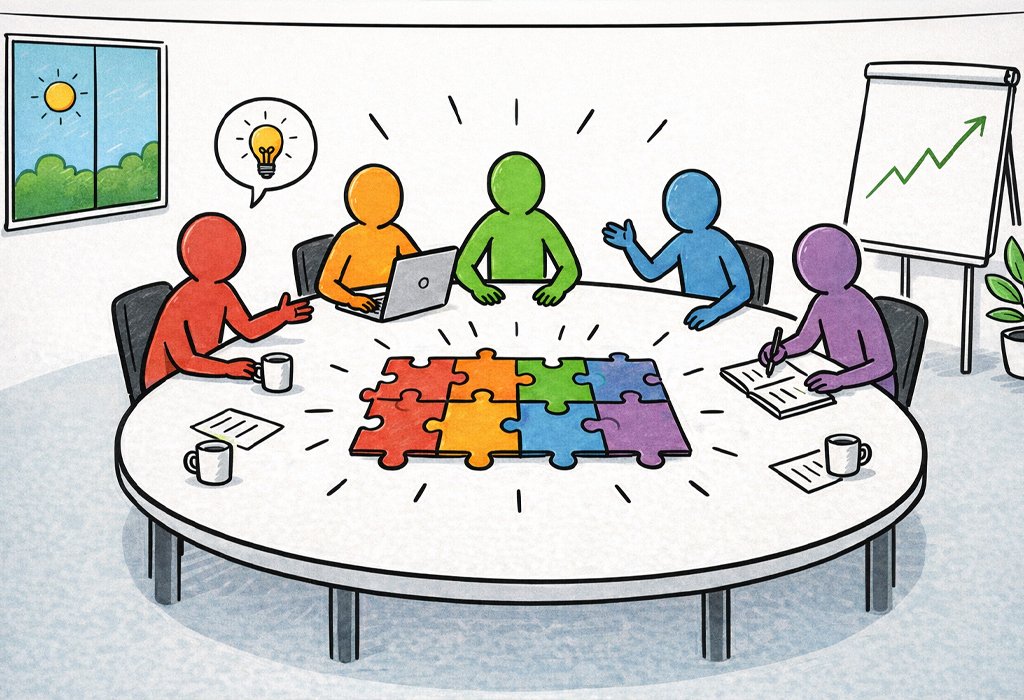
And that expansion, not hierarchy, not structure, not perfectly drafted role descriptions, is what separates a collection of departments from a team that actually wins.
For more stories, reflections, practical leadership tips, and to stay updated you can follow me on Instagram, X (Twitter), and Facebook.